
For the past 20 years, The Jackson Laboratory’s Nathan Shock Center (JAX NSC) has led the way in advancing the use of mouse models in aging research by performing state-of-the-art phenotyping of mice; establishing novel, genetically heterogeneous mouse populations; developing the statistical tools to analyze them; and providing these resources to the geroscience community.

Provide effective Center administration

Support new research on aging, late-life, and age-related diseases

Provide animal resources and human-relevant phenotyping methods

Provide data management, quality control, and analysis methods

Develop and provide computer-assisted resources and tools for analysis
The Jackson Laboratory’s Nathan Shock Center presents a machine-vision-based frailty index (vFI) for mice, utilizing machine learning and video analysis of gait, posture, and morphology to automatically measure aging and frailty more reliably than manual methods. This high-throughput approach reduces animal handling, offers consistent assessment across studies, and is applicable to diverse genetic populations for insights into aging and interventions
The JAX NSC is organized around four highly integrated research resource cores. Each core works with investigators inside and outside of JAX to enable new research projects in aging.
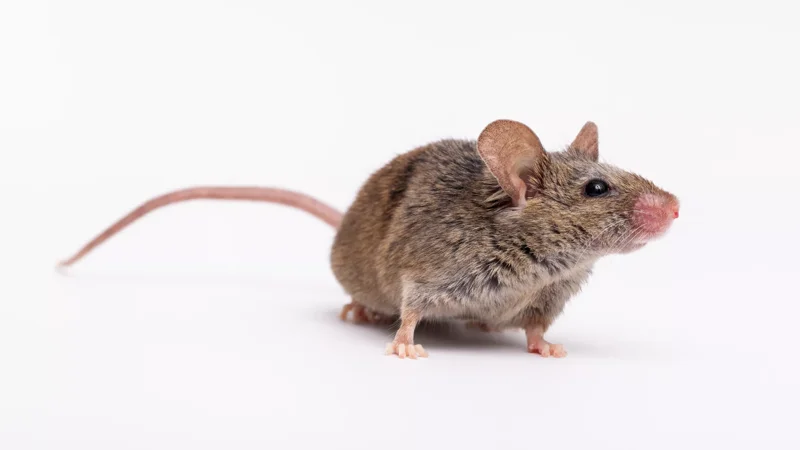
The overall goal of the Animal and Phenotyping Core is to increase the diversity of mouse resources available for aging research. The JAX NSC remains the preeminent aging research center for the development and dissemination of aging mouse models and resources.
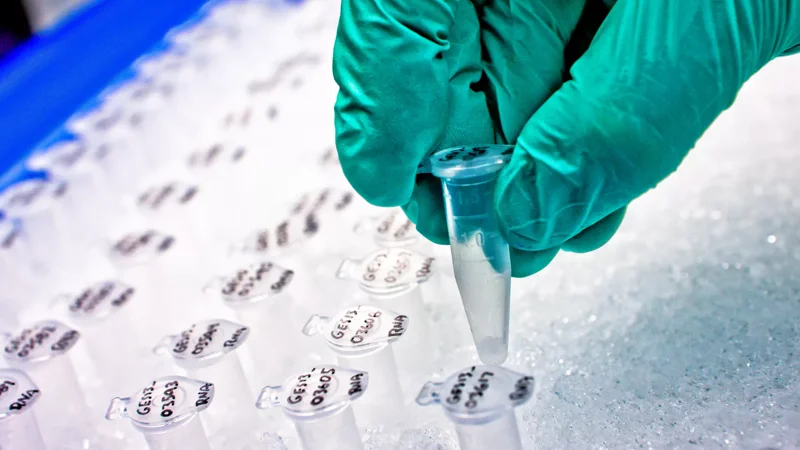
The overall goal of the Research Development Core is to promote new investigations in the field of aging research by providing pilot funds and/or resources and expertise to promising investigators and projects operating in the field of basic biology of aging.

The overall goal of the Machine learning & image analysis core (MLIA) is to develop and provide resources for the geroscience community to aid in computer-assisted histopathological analysis and discovery of age-related histological features.

The overall goal of the Data and Statistical Core is to provide critical infrastructure to JAX NSC activities including colony management, procedure scheduling, data management, and quality control. We have developed study designs, statistical methods, and software to support the analysis of mouse aging studies.
Mauduit O, Kumar P, Scholand KK, Aksan E, Schaefer L, Abu-Romman A, Delcroix V, Yu Z, Sindikubwabo AI, Korstanje R, Makarenkova HP, de Paiva CS. Exploring the transformative effects of calorie restriction on the lacrimal gland in adult mice. Geroscience. 2025 Jun 28. doi: 10.1007/s11357-025-01748-w. Epub ahead of print. PMID: 40580246.
Finch AE, McNamara AD, Onos KD, Keezer KJ, Howell GR, Webb AE. Characterization of adult hippocampal neurogenesis in adult and aged genetically diverse mice. Geroscience. 2025 Jun 17. doi: 10.1007/s11357-025-01749-9. Epub ahead of print. PMID: 40526250.
Mullis MN, Wright KM, Raj A, Gatti DM, Reifsnyder PC, Flurkey K, Archer JR, Robinson L, Di Francesco A, Svenson KL, Korstanje R, Harrison DE, Ruby JG, Churchill GA. Analysis of lifespan across diversity outbred mouse studies identifies multiple longevity-associated loci. Genetics. 2025 Aug 6;230(4):iyaf081. doi: 10.1093/genetics/iyaf081. PMID: 40326784; PMCID: PMC12342377.
Litichevskiy L, Considine M, Gill J, Shandar V, Cox TO, Descamps HC, Wright KM, Amses KR, Dohnalová L, Liou MJ, Tetlak M, Galindo-Fiallos MR, Wong AC, Lundgren P, Kim J, Uhr GT, Rahman RJ, Mason S, Merenstein C, Bushman FD, Raj A, Harding F, Chen Z, Prateek GV, Mullis M, Deighan AG, Robinson L, Tanes C, Bittinger K, Chakraborty M, Bhatt AS, Li H, Barnett I, Davenport ER, Broman KW, Levy M, Cohen RL, Botstein D, Freund A, Di Francesco A, Churchill GA, Li M, Thaiss CA. Gut metagenomes reveal interactions between dietary restriction, ageing and the microbiome in genetically diverse mice. Nat Microbiol. 2025 May;10(5):1240-1257. doi: 10.1038/s41564-025-01963-3. Epub 2025 Mar 31. PMID: 40164832; PMCID: PMC12360852.
Reisz JA, Earley EJ, Nemkov T, Key A, Stephenson D, Keele GR, Dzieciatkowska M, Spitalnik SL, Hod EA, Kleinman S, Roubinian NH, Gladwin MT, Hansen KC, Norris PJ, Busch MP, Zimring JC, Churchill GA, Page GP, D’Alessandro A. Arginine metabolism is a biomarker of red blood cell and human aging. Aging Cell. 2025 Feb;24(2):e14388. doi: 10.1111/acel.14388. Epub 2024 Oct 30. PMID: 39478346.
Angarola BL, Sharma S, Katiyar N, Kang HG, Nehar-Belaid D, Park S, Gott R, Eryilmaz GN, LaBarge MA, Palucka K, Chuang JH, Korstanje R, Ucar D, Anczukόw O. Comprehensive single-cell aging atlas of healthy mammary tissues reveals shared epigenomic and transcriptomic signatures of aging and cancer. Nat Aging. 2025 Jan;5(1):122-143. doi: 10.1038/s43587-024-00751-8. Epub 2024 Nov 25. PMID: 39587369.
Luciano A, Churchill GA. The impact of co-housing on murine aging studies. Geroscience. 2025 Jun;47(3):3095-3110. doi: 10.1007/s11357-024-01480-x. Epub 2025 Jan 14. PMID: 39806236; PMCID: PMC12181492.
González JT, Thrush-Evensen K, Meer M, Levine ME, Higgins-Chen AT. Age-invariant genes: multi-tissue identification and characterization of murine reference genes. Aging (Albany NY). 2025 Jan 27;17(1):170-202. doi: 10.18632/aging.206192. Epub 2025 Jan 27. PMID: 39873648.
Sabnis GS, Churchill GA, Kumar V. Machine vision-based frailty assessment for genetically diverse mice. Geroscience. 2025 Aug;47(4):5435-5448. doi: 10.1007/s11357-025-01583-z. Epub 2025 Mar 17. PMID: 40095188; PMCID: PMC12397023.
Hill WG, MacIver B, Churchill GA, DeOliveira MG, Zeidel ML, Cicconet M. ML-UrineQuant: A machine learning program for identifying and quantifying mouse urine on absorbent paper. Physiol Rep. 2025 Mar;13(6):e70243. doi: 10.14814/phy2.70243. PMID: 40102661.