
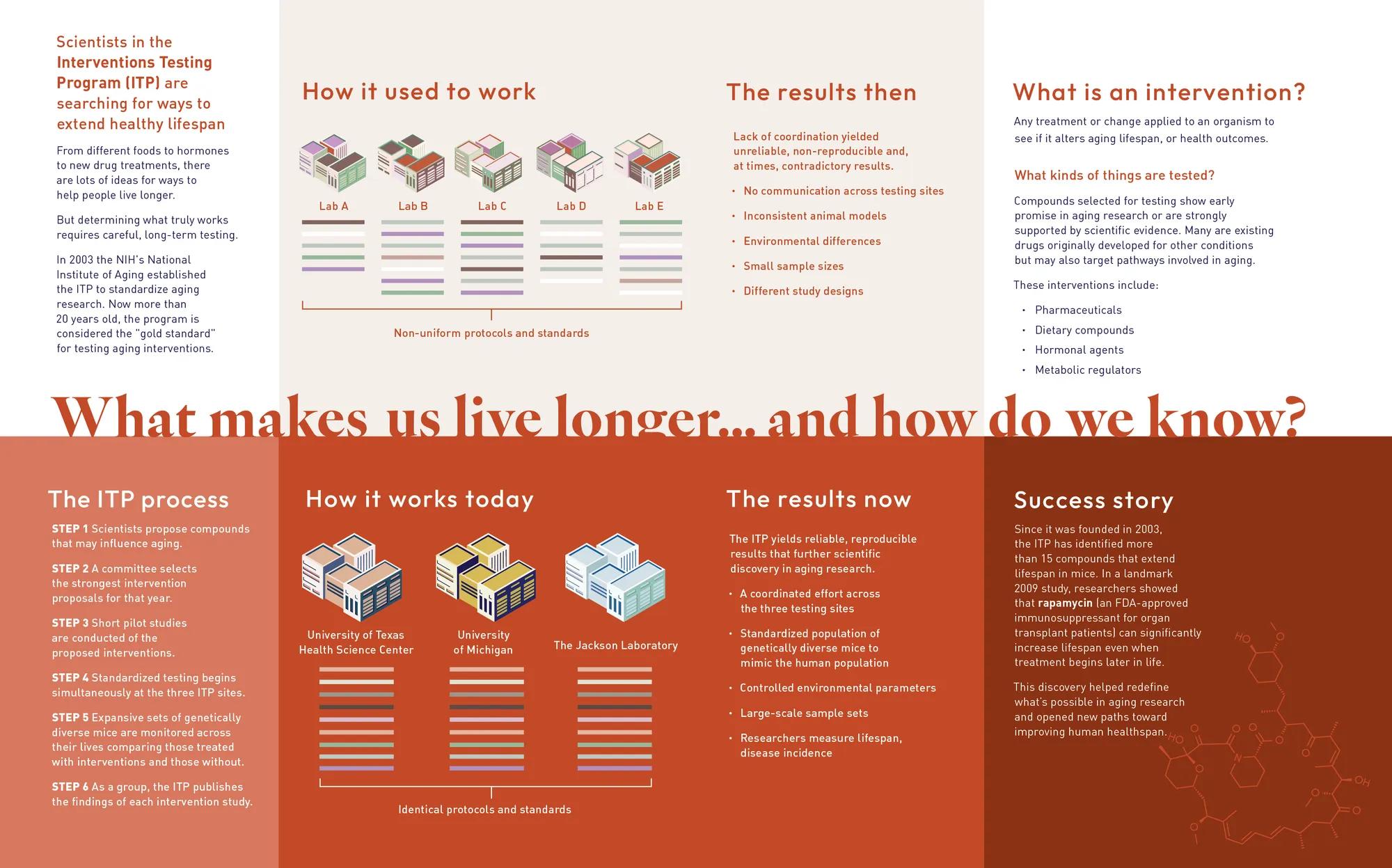
The National Institute on Aging’s (NIA) Interventions Testing Program (ITP) is a multi-site collaborative project that tests orally-administered agents for their ability to extend lifespan and affect certain health outcomes. ITP studies are performed at three sites: The Jackson Laboratory, the University of Michigan, and UT Health San Antonio. The program tests diets, drugs, or other interventions to see if they prevent disease and extend lifespan in mice. The ITP uses the UM-HET3 genetically heterogeneous mouse model.
Visit the ITP Data Coordinating Center (DCC) database for information and data on compounds tested by the ITP.

Statistical analysis

Pharmacology

Toxicology

Optimal diet compounding

Non-harmful tests of age-sensitive physiological function
Is your team involved in aging studies? In this episode we will dive into the advantages of aged HET3 mice from The Jackson Laboratory. This genetically heterogenous stock has been a long-standing cornerstone of the NIA's Intervention Testing Program in pursuit of anti-aging compounds. We will discuss considerations for using and caring for this model, along with how to reserve cohorts.
Strong R, Nelson JF, Bogue MA, Colca JR, Denzel M, Diaz V, Finck BN, Gladyshev VN, Horvath S, Jiang N, Keller T, Kletzien RF, Korstanje R, Kumar N, Leeuwenburgh C, Fernandez E, Galecki A, Ginsburg B, Han M, Kaczorowski C, Leiser S, Lopez-Cruzan M, Raj K, Reifsnyder PC, Rosenthal NA, Rosi S, Shindyapina A, Stacpoole P, Salmon AB, Tyshkovskiy A, Walter P, Whitman M, Miller RA, Harrison DE. Extension of lifespan by epicatechin, halofuginone and mitoglitazone in male but not female genetically heterogeneous mice. Geroscience. 2025 Sep 19. doi: 10.1007/s11357-025-01881-6. Epub ahead of print. PMID: 40973907.
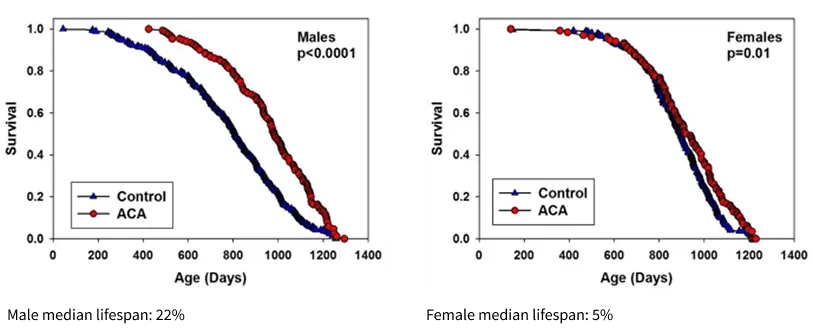
Miller RA, Harrison DE, Allison DB, Bogue M, Debarba L, Diaz V, Fernandez E, Galecki A, Garvey WT, Jayarathne H, Kumar N, Javors MA, Ladiges WC, Macchiarini F, Nelson J, Reifsnyder P, Rosenthal NA, Sadagurski M, Salmon AB, Smith DL Jr, Snyder JM, Lombard DB, Strong R. Canagliflozin extends life span in genetically heterogeneous male but not female mice. JCI Insight. 2020 Nov 5;5(21):e140019. doi: 10.1172/jci.insight.140019. PMID: 32990681; PMCID: PMC7710304.
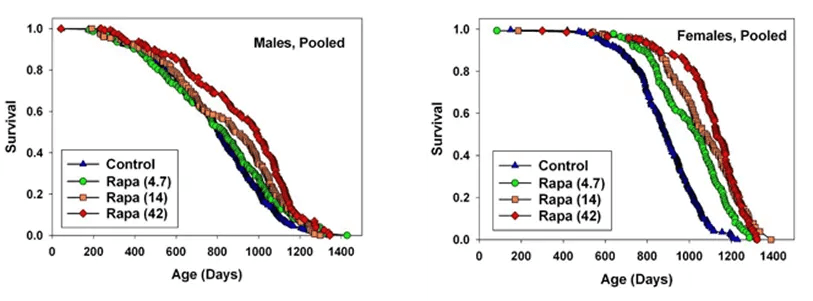
Miller RA, Harrison DE, Astle CM, Fernandez E, Flurkey K, Han M, Javors MA, Li X, Nadon NL, Nelson JF, Pletcher S, Salmon AB, Sharp ZD, Van Roekel S, Winkleman L, Strong R. Rapamycin-mediated lifespan increase in mice is dose and sex dependent and metabolically distinct from dietary restriction. Aging Cell. 2014 Jun;13(3):468-77. doi: 10.1111/acel.12194. Epub 2014 Feb 9. PMID: 24341993; PMCID: PMC4032600.
Miller RA, Harrison DE, Astle CM, Baur JA, Boyd AR, de Cabo R, Fernandez E, Flurkey K, Javors MA, Nelson JF, Orihuela CJ, Pletcher S, Sharp ZD, Sinclair D, Starnes JW, Wilkinson JE, Nadon NL, Strong R. Rapamycin, but not resveratrol or simvastatin, extends life span of genetically heterogeneous mice. J Gerontol A Biol Sci Med Sci. 2011 Feb;66(2):191-201. doi: 10.1093/gerona/glq178. Epub 2010 Oct 25. PMID: 20974732; PMCID: PMC3021372.
Harrison DE, Strong R, Sharp ZD, Nelson JF, Astle CM, Flurkey K, Nadon NL, Wilkinson JE, Frenkel K, Carter CS, Pahor M, Javors MA, Fernandez E, Miller RA. Rapamycin fed late in life extends lifespan in genetically heterogeneous mice. Nature. 2009 Jul 16;460(7253):392-5. doi: 10.1038/nature08221. Epub 2009 Jul 8. PMID: 19587680; PMCID: PMC2786175.