How JAX research is unlocking the secrets to living longer, healthier lives
Over the past century, advances in medicine, public health and technology have dramatically extended human lifespan. Diseases that once claimed lives early are now treatable, and people around the world are living longer than ever before.
But longer life does not always mean a healthier life.
To address that gap, researchers are shifting their focus away from lifespan alone toward a more nuanced goal — healthspan: the years of life spent in good health before the onset of serious disease or decline.
For many people, those additional years are accompanied by chronic diseases such as cancer, heart conditions, diabetes and dementia. While lifespan has increased, the number of years spent managing illness has grown along with it.
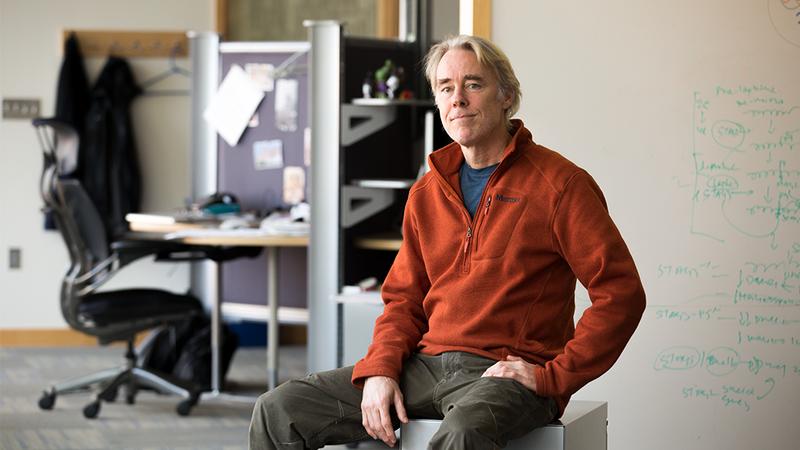
We’ve been very successful in medicine in that we’re able to live longer. But as you live longer, you’re more susceptible to age-related diseases. The real challenge now is extending that healthy portion of life.
Gareth Howell, Ph.D., JAX professor and Diana Davis Spencer Foundation Chair for Glaucoma Research
Understanding aging is one of the most complex challenges in biology. Genetics, environment, lifestyle and countless molecular processes all shape how the body changes over time.
At JAX, scientists are working on the problem from every angle to uncover the biological drivers of healthy aging and translate those into strategies that help people remain vibrant and independent well into old age.
Modeling longevity
JAX Professor and Karl Gunnar Johansson Endowed Chair Gary Churchill refers to himself simply as a mouse geneticist.
With their shorter lifespans, mice make ideal avatars to study aging. A mouse that is two years old is roughly equivalent to an 80-year-old human. In one of Churchill’s studies on the connection between longevity and diet, a mouse lived more than four and a half years old.
So why did that particular mouse reach such a ripe, old age? Genetics, according to Churchill.
“She was naturally healthy. She had been born with it.” She also had a clean environment, access to veterinary care and had been put on a diet of caloric restriction.
Rather than relying on a single inbred strain of mice, Churchill, like many JAX scientists, runs experiments that follow hundreds of genetically diverse animals across their entire lives.
Lifespan, longevity and healthspan are all genetically plastic, meaning that genetics can impact them. Humans are obviously genetically diverse. So, if we're not studying a genetically diverse animal model, we're missing half the story.
Gary Churchill, Ph.D., JAX professor and Karl Gunnar Johansson Endowed Chair
In a more recent study of nearly 1,000 genetically diverse mice, Churchill’s team compared several dietary strategies, including intermittent fasting and different levels of caloric restriction. On average, animals that consumed fewer calories lived longer than those allowed to eat freely. But the results also revealed a surprising twist.
The mice that lived the longest were not those that lost the most weight. Instead, the longest-lived animals were those that maintained their body weight despite eating less, an indicator of biological resilience.
“The animals that live the longest are the ones that deal with stress well,” said Churchill. “They’re naturally resilient.”
Support JAX research
Your gift makes it possible for discoveries to happen faster, for novel ideas to be explored and for research to accelerate forward at a scale that delivers life-changing scientific breakthroughs.
Principal Computational Scientist Matt Mahoney describes aging research as an effort to understand not just how long we live, but how well our bodies function over time. In his view, one of the most exciting advances is the ability to see aging in ways that were previously hidden.
Rather than looking only for obvious signs of damage, JAX researchers are using AI-powered imaging tools to study subtle, widespread changes in tissues that may reveal how aging is unfolding long before it becomes easy to spot.
“There are 18-month-old mice that look like they’re average for a 6-month-old mouse, and vice versa,” he said. “With AI, we can now start to try to connect changes in your apparent age relative to your chronological age back to underlying genetics. Is there some underlying genetic signal that tells us something important about how old you look, not just how old you are?”
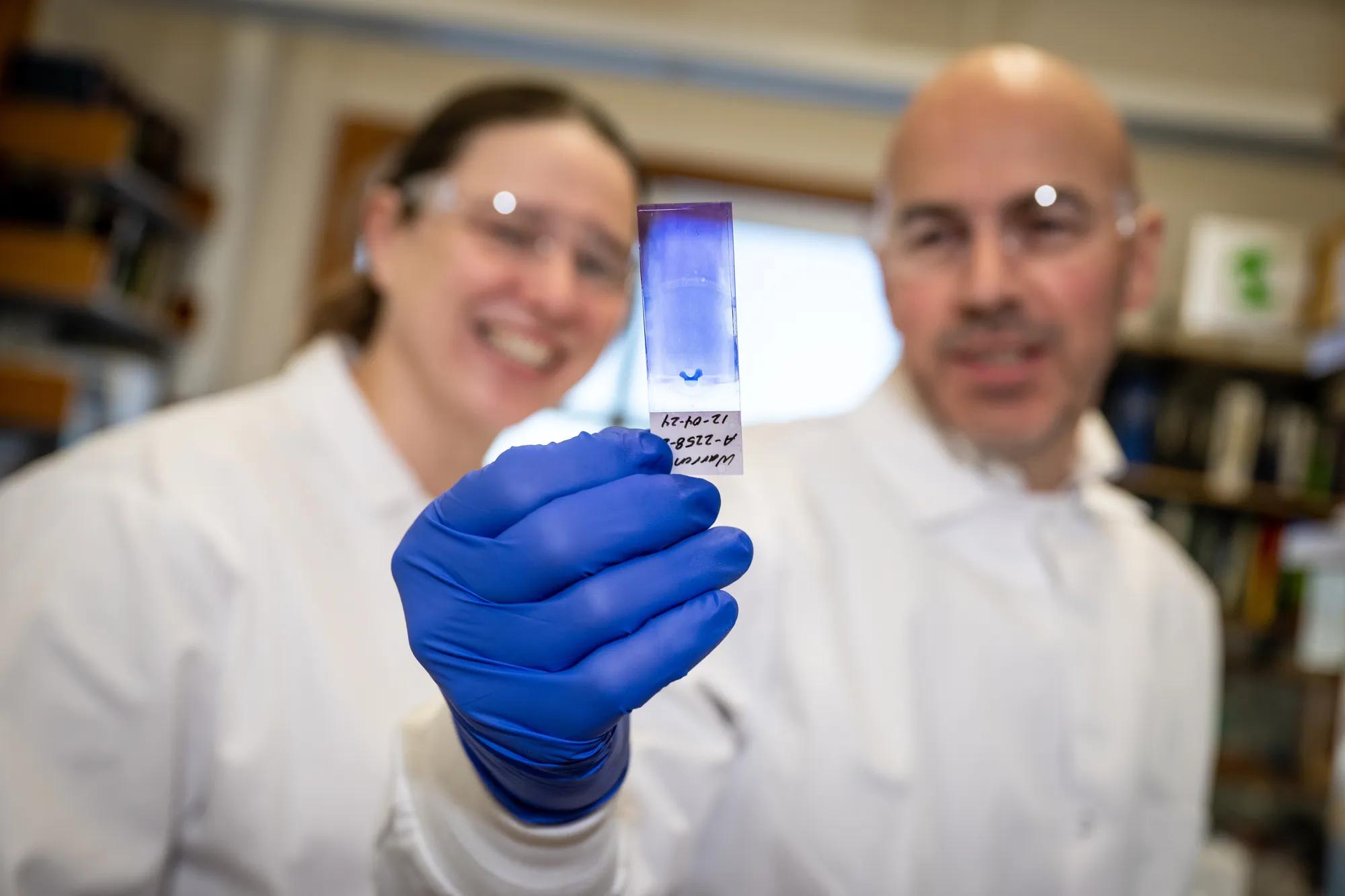
Aleksandra Aljakna Khan, Ph.D. and Ron Korstanje, Ph.D.
These machine learning tools provide a strong complement to traditional approaches, helping scientists uncover patterns in aging that the human eye alone might miss, said Mahoney.
The biology of resilience
Ron Korstanje, JAX professor and Evnin Family Chair, studies the biological factors that shape resilience — the body’s ability to stay healthy despite stress, disease or the gradual wear of aging.
While lifestyle factors such as diet and exercise play a huge role in healthspan, Korstanje believes genetics also helps determine how individuals respond to potential anti-aging therapies.
Everyone ages differently. If we want to understand aging, we need to understand that variation.
Ron Korstanje, Ph.D., JAX professor and Evnin Family Chair
His team is currently researching senolytics, drugs designed to eliminate senescent “zombie” cells that accumulate with age and can release inflammatory signals linked to disease. While these compounds have shown promise in one common inbred strain of laboratory mice, Korstanje’s work suggests the story may be more complicated.
When tested on a diverse mouse cohort through the National Institute on Aging’s Interventions Testing Program, one widely studied senolytic showed no effect on lifespan. Korstanje suspects the answer lies in the genes.
His lab is testing the drug across the individual mouse strains that make up the diverse population, predicting that some will benefit while others will not.
Working with genetically-diverse mice can help shed light on how genes shape resilience and how individual variation determines whether potential anti-aging interventions work or fail.
Because aging happens over decades, scientists need faster ways to measure whether a treatment is actually slowing the aging process. One promising solution is identifying biomarkers of aging — measurable biological signals that indicate whether aging is accelerating or slowing down. These markers could allow researchers to test potential therapies in people without waiting a lifetime to see the results.
A future full of vitality
By identifying the biological processes that shape healthspan and developing tools to measure them, JAX researchers are beginning to test strategies that could delay disease, extend healthy function and help people remain active and independent longer.
The goal is not to stop aging, but to reshape how it unfolds.
Featured in Search
Search magazine is a publication from The Jackson Laboratory focused on research discovering and human health.