In the United States alone, nearly a quarter of the population will be 65 or older by 2040. Older adults are also the population most vulnerable to diseases such as Alzheimer’s, cancer and heart disease.
Aging is inevitable, but the pace at which it unfolds and the diseases that accompany it are not. That’s why JAX has been at the forefront of aging research for decades — working to understand why some individuals remain healthier longer while others develop age-related diseases earlier in life.
“We want to extend life, but we want to extend the healthy portion of life, not the period of decline at the end,” said Gary Churchill, JAX professor and Karl Gunnar Johansson Endowed Chair. “What we want isn’t just a longer life, it’s a longer, healthy life.”
Every person ages at a different rate. That’s the difference between what scientists call chronological aging (the number of years you’ve been alive) and biological aging (how healthy you are at any given age).
JAX scientists are tackling that challenge through a combination of genetics, advanced model systems and emerging technologies that allow researchers to understand aging in new ways.
We all recognize aging when we see it, but understanding the mechanisms behind it is incredibly challenging.
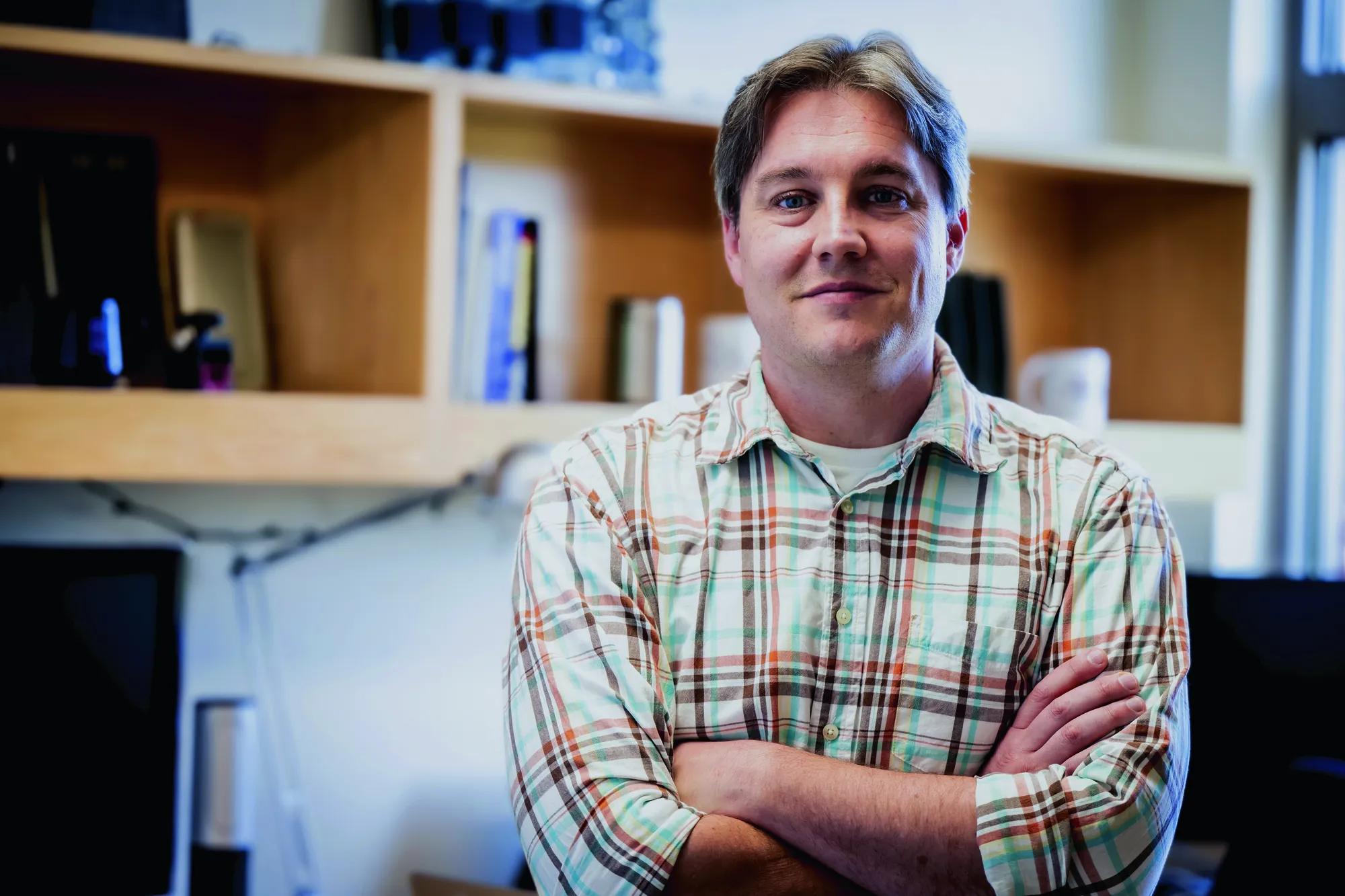
Matt Mahoney, Ph.D., a computational scientist at JAX
A long history in aging science
JAX is home to some of the most influential scientific programs in the field. Researchers in the JAX Center for Aging Research use their expertise in biology and genomics to uncover the mechanisms behind aging and age-related diseases. The laboratory is home to one of the National Institute on Aging’s Nathan Shock Centers of Excellence for the Basic Biology of Aging, participates in the Interventions Testing Program, and contributes to major national initiatives mapping how aging changes tissues and cells throughout the body.
These programs allow scientists to test potential therapies, identify biological mechanisms of aging and develop new tools that benefit researchers around the world.
“JAX is a hub for aging research,” said Ron Korstanje, JAX professor and Evnin Family Chair. “Everyone here studies aging in some way. You have cancer researchers, immunologists and neuroscientists all looking at different pieces of the same problem.”
At the center of that work is a fundamental question: Why do some individuals maintain their health well into later life while others don’t?
“Decline in aging isn’t inevitable. We know there are things we can influence that slow down decline,” said Korstanje. “From genetic modification to diet and exercise, research shows there are ways to increase the healthy years.”
Even in carefully controlled laboratory settings, where animals live in the same environment and receive the same care, some stay healthy far longer than others. By studying these differences, JAX researchers are working to identify the genes, pathways and cellular processes that help protect against decline.
Support JAX research
Your gift makes it possible for discoveries to happen faster, for novel ideas to be explored and for research to accelerate forward at a scale that delivers life-changing scientific breakthroughs.
By combining genetics, animal and cellular model systems, and advanced data science, JAX researchers are building a deeper understanding of the biological processes that shape how we age. Those insights could ultimately lead to new ways to predict risk, personalize treatments and extend the part of our lives where we’re healthiest — a developing field known as precision geroscience.
“If we understand why some people age better immunologically than others, we can help not only individuals, but the entire population,” said Duygu Ucar, JAX professor and Florine Deschenes Roux Endowed Chair.
At the same time, scientific innovations from artificial intelligence to high‑resolution imaging are transforming how researchers study aging. The acquisition of The New York Stem Cell Foundation and the creation of the JAX–NYSCF Collaborative have also expanded JAX’s capabilities in human stem cell biology and disease modeling.
These advances allow JAX scientists to tackle the mysteries of aging from every angle — uncovering its genetic and biological drivers, building better models to study the process, and identifying biomarkers and interventions that may one day help people stay healthier longer.
Understanding aging won’t stop time. But it could help ensure that longer lives are also healthier lives.
Featured in Search
Search magazine is a publication from The Jackson Laboratory focused on research discovering and human health.