
By Lisa Nichols
Article | July 29, 2026
Dinakar, who has served on the JAX Board of Trustees since 2022, made his life’s mission to spare families the heartbreak of losing a child. For two decades, he has worked with The Jackson Laboratory to accelerate rare disease research into the clinic. JAX’s union with The New York Stem Cell Foundation, he says, elevates JAX as a resource for families in need.
“Together, JAX and NYSCF create what does not currently exist,” he said, “a one-stop resource that helps families living with rare disease find out if they can solve it. When your child is suffering, you don’t have time or energy for anything else.”
The race against time
Dinakar understands the urgency. In 2001, his daughter Arya Singh was diagnosed with spinal muscular atrophy (SMA), a rare neuromuscular disorder that remains the leading genetic cause of death for babies and children. At the time, SMA had no treatment and no cure. Though Arya was 18 months old and cognitively healthy, the prevailing sentiment from the medical community was, we’re sorry for your loss.
But that was not the end of her story.
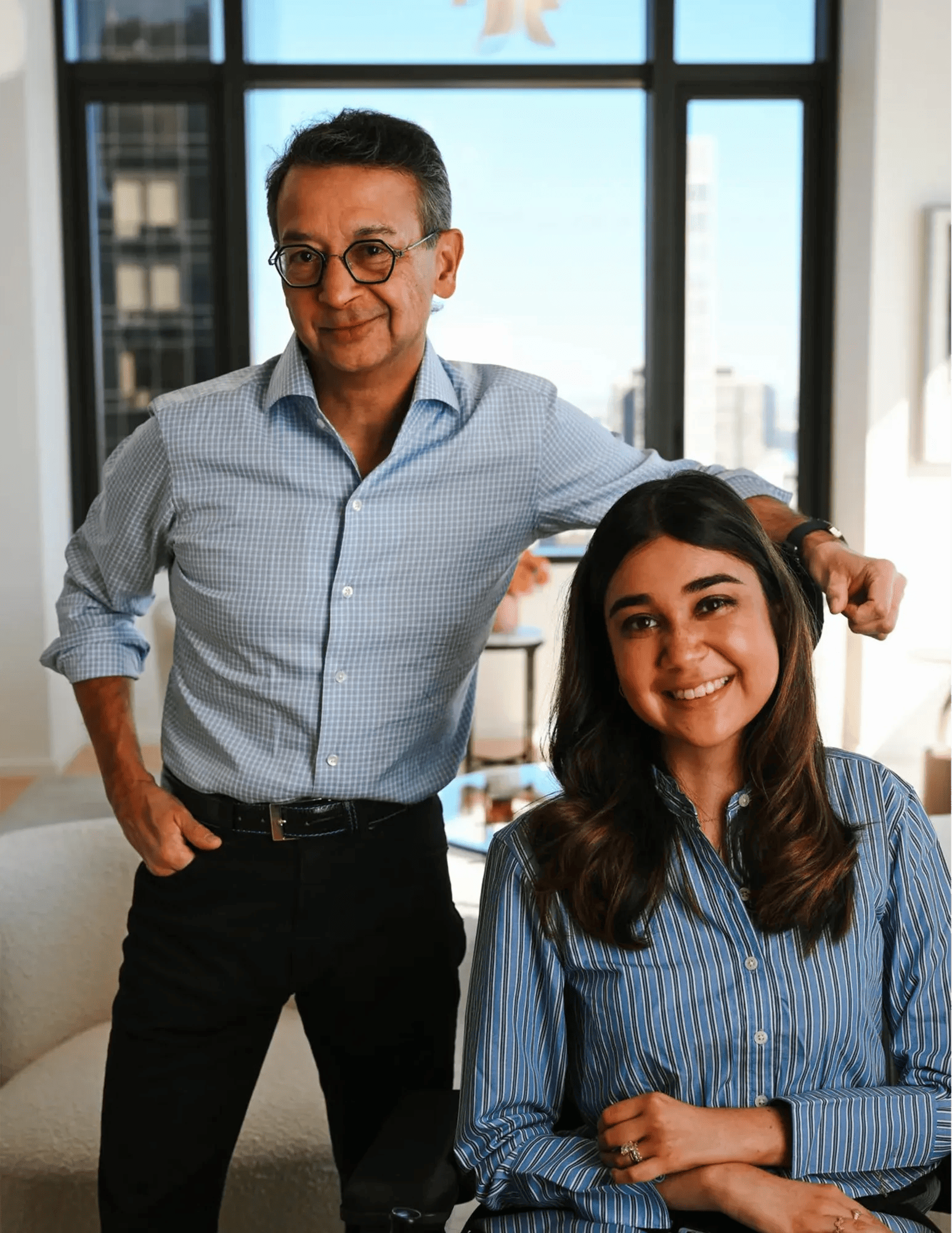
Determined to find a treatment, Dinakar departed a high-profile role at Goldman Sachs to start his own investment firm, Axon Capital, and fund potentially life-saving research (an axon is the nerve that sends electrical signals from the brain to muscle tissue; the name is a nod to the power of connecting thought to action).
One of Dinakar’s earliest partners was Cat Lutz, now vice president of JAX’s Rare Disease Translational Center, who developed mouse models of various strains of SMA and identified a critical therapeutic window of opportunity for treatment. To scientists around the world, Axon offered to test potential SMA drug candidates for free, just to see if one might have promise. His approach was ambitious, risky, and expensive.
“Once you know there’s a chance your child could be saved, it almost deranges you,” he said. “Anything that isn’t at maximum speed feels like a wasted moment.”
Then, a breakthrough. In just three years — lightning speed for a journey that takes decades — Arya became one of the first patients in the world to receive an SMA treatment through a clinical trial.
“We proved that with the right resources in place, you can develop a safe, effective therapy in a fraction of the time,” Dinakar said. Today, his advocacy work focuses on reducing cost barriers and shortening the drug development timeline.
At age 10, six years before formal FDA approval, Arya became “patient one” for an SMA treatment known as antisense oligonucleotide (ASO) therapy, designed to “silence” the gene responsible for her condition. Her father’s out-of-the-box approach had worked.
A life worth fighting for
Now 25, Arya is a force for change in the public health field, channeling her experience into advocacy for children with rare diseases and chronic illnesses. In Washington, D.C., she has testified before Congress and met with top advisors about rare disease legislation. She has also spoken at rare disease conferences around the country.

She graduated from Yale University, received a master’s degree in public health, and is pursuing her doctorate at Weill Cornell. She published a children’s book about the ethics of clinical trials and recently married in Bar Harbor, not far from JAX’s headquarters.
“I have never let SMA stop me from chasing my dreams — which includes the dream of helping others,” Arya said. "That commitment was only made possible because of the remarkable progress JAX has led for SMA.”
Support JAX research
Your gift makes it possible for discoveries to happen faster, for novel ideas to be explored and for research to accelerate forward at a scale that delivers life-changing scientific breakthroughs.
Lessons in advocacy
Looking back, Arya sees that her parents modeled advocacy every day. They came to her school to answer classmates’ questions about life in a wheelchair. They sent home flyers about spinal muscular atrophy to educate parents. In a routine known as “pre-tripping,” they even scouted field trips ahead of time for wheelchair accessibility.
Dinakar is a proud father first and forever. But Arya, too, understands the magnitude of his efforts and the sacrifices he has made not just for her, but for families like theirs.
“My dad is the most selfless person I have ever known, and he refuses to take credit for it,” she said. “He saved my life. With the support and collaboration from JAX, he has also helped me follow my dreams.”
A future that cares about rare
Like a father and daughter who share a love that is rare — yet not rare at all — rare diseases are universal. SMA is one of 8,000 rare conditions that affect an estimated 350-400 million people worldwide.
With the launch of the Center for Therapeutic Genetics — a collaboration with the Broad Institute and Boston Children’s Hospital — JAX amplifies a historic commitment to answering a question Dinakar still receives weekly from other parents: Can we do for my child what was done for yours? At JAX, we envision a future where the answer is always “yes.”
Learn more

Rare Disease
While each rare disease affects only a small number of people, together they impact millions and offer clues about how biology works.
View more
Broad Institute, Boston Children’s Hospital, and The Jackson Laboratory launch the Center for Therapeutic Genetics
A new collaboration to develop precision medicines for those with rare diseases, using infrastructure and repeatable practices that will be shared with others.
View more