
‘Scientifically Speaking’ explores the body’s innermost workings
Article | September 24, 2025
The Jackson Laboratory’s virtual series ‘Scientifically Speaking’ continues on September 30 with Ramalakshmi Ramasamy and Daniel Alfonso Peñarete-Acosta, early-career JAX scientists who are decoding the biology of two crucial, understudied organs: the placenta and the colon.
Ramasamy’s work has implications for reproductive health, including better detection and prevention of certain pregnancy complications such as preeclampsia, which affects 1 in 12 pregnancies globally. Peñarete-Acosta’s research could inform therapeutic strategies for conditions like colon cancer, for which incidence rates in adults under age 55 have doubled in the past two decades without a clear answer as to why.
As they build their careers at JAX, they are both driven by a genuine desire to help others. Here’s a look at their work and the difference they hope it will make.
Placental cells balance the ‘accelerator’ and the ‘brake’

Ramasamy studies cell growth in early human development, specifically cells in the placenta, to understand how their function changes as pregnancy progresses. She studies a process called cellular senescence, or the process by which cells stop dividing. Using the analogy of an accelerator and a brake, she says the placenta typically maintains a healthy balance between growing cells and senescent cells to support the growing fetus.
“Cells in the placenta are well programmed,” she said. “They know when to hit the accelerator and facilitate growth, and they know when to press the brake to tell cells to stop growing and dividing. The problems come later in life when aging causes that programmed developmental senescence to go haywire.”
When cell growth continues unchecked, it can result in diseases like cancer. On the other hand, too much accumulation of senescent cells can trigger the onset of age-associated disorders. Understanding the balance in the placenta could help us determine how to preserve it over time and help us live healthier for longer.
A better way to treat pregnancy disorders
Ramasamy’s research has also shown that the placenta is not immune to imbalances of its own. Higher senescence in the placenta correlates to disorders like preeclampsia, a potentially dangerous pregnancy complication caused by lack of healthy placental development and characterized by high blood pressure in the mother. The only way to treat the condition is to deliver the baby, most often prematurely, which carries risks for both mother and child.
“Preeclampsia has been recognized for over four centuries, yet its mechanisms remain unclear. Using spatial profiling technologies and cellular models, we aim to uncover its molecular basis to enable targeted diagnostics and therapies — so that no woman must choose between her life and her baby’s due to a disease we do not understand,” she said.
Ramasamy hopes her research might one day treat placental disorders with a simple blood test that leverages the feedback loop between the placenta and the mother’s body.
“The placenta releases compounds that feed back into the mother’s bloodstream,” she said. “The fetus essentially invades the maternal body, the maternal body allows it to invade, and they both need to work together accordingly for a successful pregnancy. That’s the beauty of this research.”
Building a better disease model
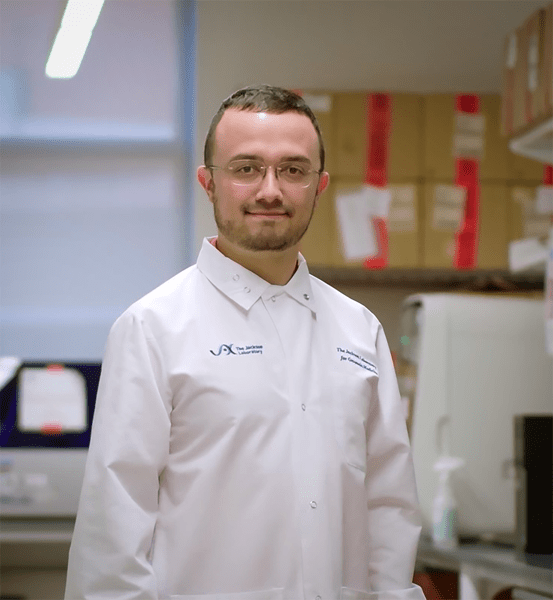
To better understand gastrointestinal diseases like inflammatory bowel syndrome, Crohn’s disease and colon cancer, Daniel Alfonso Peñarete-Acosta studies interactions between the colon’s microbiome and its immune system. The microbiome, he said, contains both good and bad bacteria, but it’s hard to tell which is which.
In his research, he tests gut bacteria with a device commonly referred to as an “organ on a chip,” in which he uses a patient sample to grow intestinal tissue in a highly controlled environment. He can then differentiate “good” microbes from bacteria that might be contributing to disease progression and test therapeutic strategies that could lead to more effective treatments.
“You don’t want to build an overcomplicated model,” he says, referring to the organ-on-a-chip device. “Once the model reaches a balance between usefulness and sophistication, it will be all about application. We’ll use it for gastrointestinal diseases but for other conditions as well — and not just to study them, but to develop therapies for them, too.”
Science as a creative act
Peñarete-Acosta says this technology will be instrumental in building more personalized approaches to medical care.
“For the entire history of medicine, we’ve been talking about averages,” he said. “But there’s so much diversity in diseases, in human health and in response to toxins and microbes. Our tissue engineering approach will allow us to acknowledge that diversity and respond accordingly in a clinical setting.”
He said science allows him to combine curiosity, creativity and real-world impact. He works closely with partners at UConn Health and Connecticut Children’s Hospital to acquire patient samples, collaborate with clinicians and to study gastrointestinal diseases in real time, which has helped deepen his research.
“Sometimes I think creativity is fueled by pure stubbornness — by the drive to make an experiment work even if it’s the last thing you ever accomplish,” he said. “Science thrives on that creativity and innovation. Even the simplest hypothesis is an act of creation, isn’t it?”
Learn more
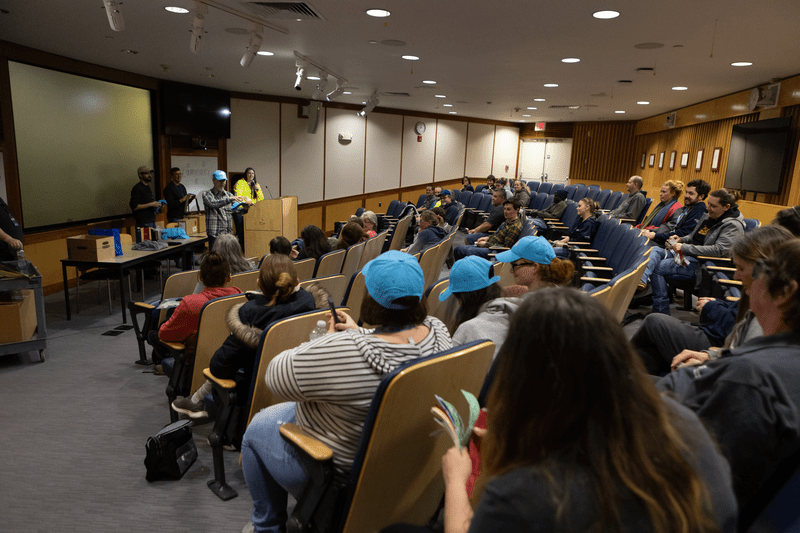
Scientifically Speaking
Scientifically Speaking is a virtual event series designed to highlight JAX's distinctive combination of research, education and resources and our role in empowering the biomedical community to improve the future of human health. Content is intended to be accessible and engaging for all audiences.
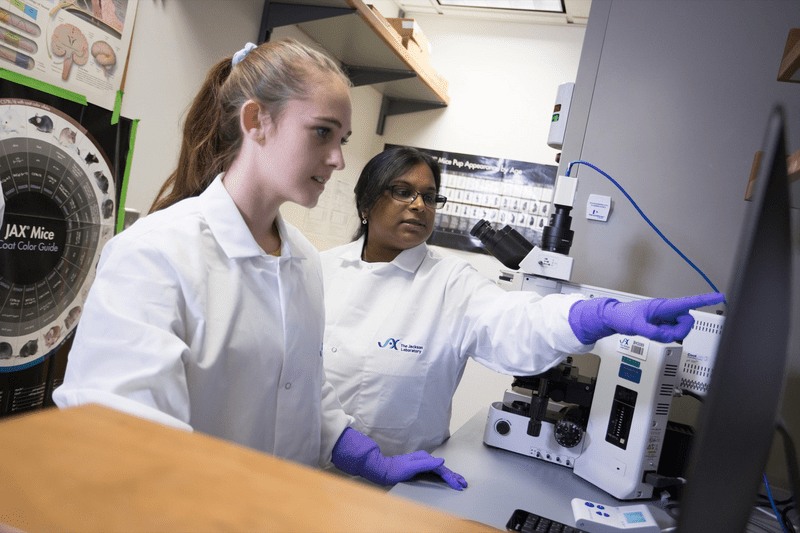
Donate to 2025 Breakthrough: Young Scientists
Emerging scientific leaders at JAX are tackling humanity's greatest health challenges — from Alzheimer's detection to triple-negative breast cancer treatments.
But they need your support to continue.