
JAX and NYSCF launch a new engine for biomedical discovery
December 19, 2025
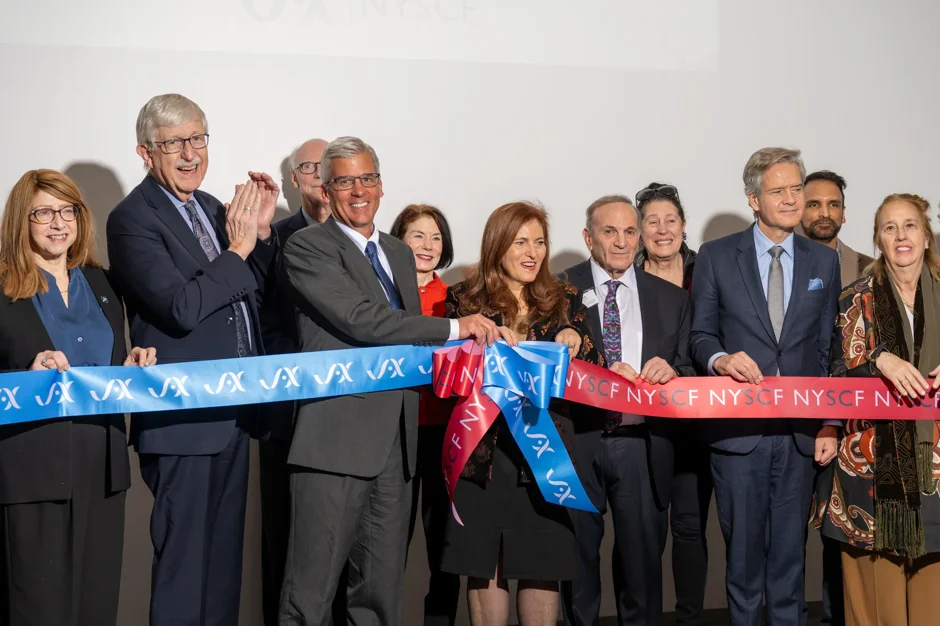
(New York, NY – Dec. 19, 2025) — The Jackson Laboratory (JAX) and the New York Stem Cell Foundation (NYSCF) on Wednesday celebrated the official launch of their unified organization with a ribbon-tying ceremony at NYSCF’s Manhattan research facilities. This milestone marks a strategic acquisition designed to transform early-stage biomedical discovery and speed the path from biological insights to new therapies.
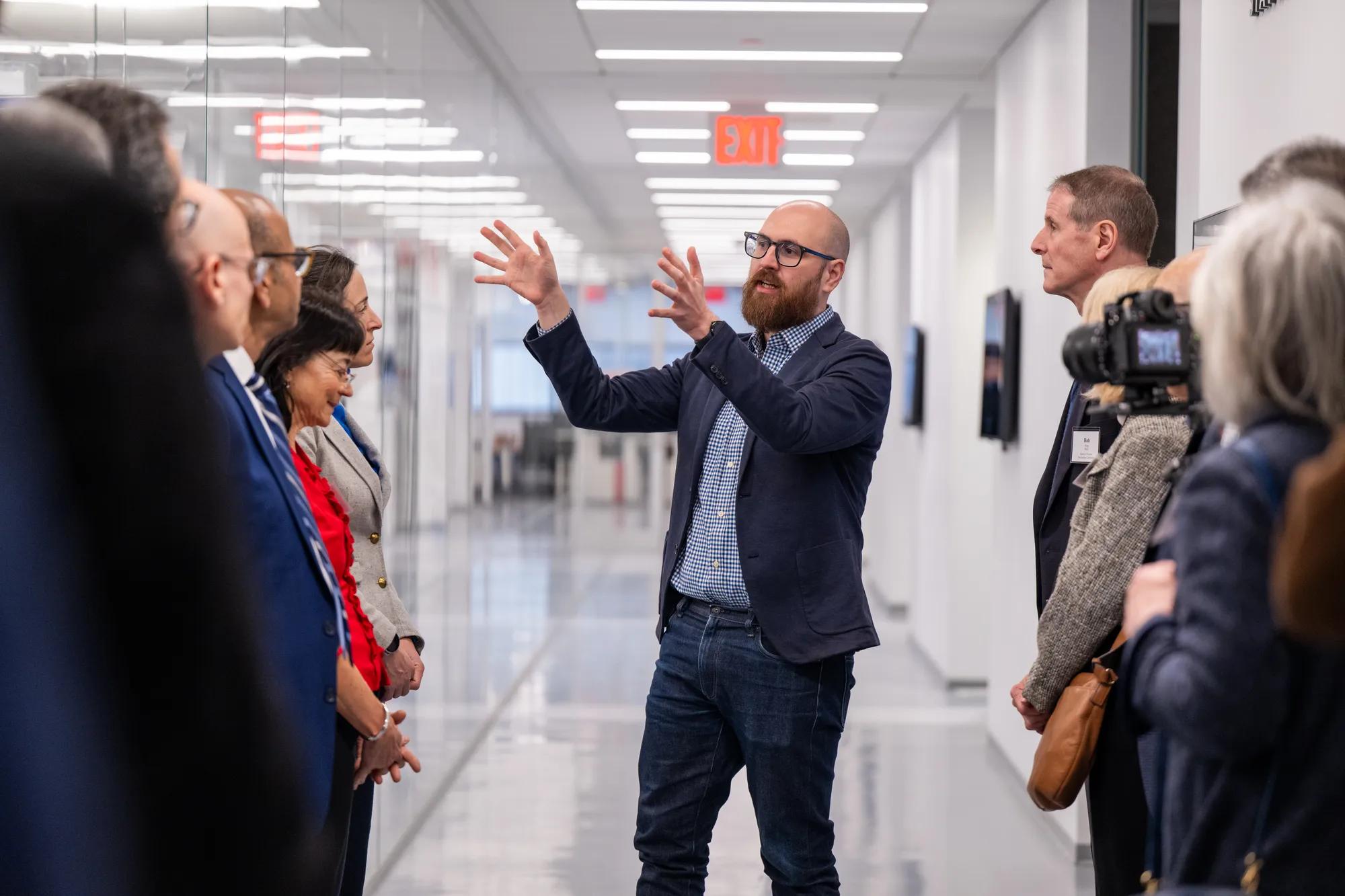
The event brought together nearly 170 leading researchers, industry executives, local government officials, board members, staff, and supporters for remarks and laboratory tours. Speakers emphasized how the combined organization will create more advanced, predictive research platforms, helping scientists worldwide uncover disease mechanisms earlier and translate promising discoveries into therapies with a higher likelihood of success.
“This is about building a new kind of research engine,” Lon Cardon, JAX president and CEO, said at the event. “When you bring together JAX’s leadership in mouse and cell biology with NYSCF’s pioneering innovation in human stem cells and automation, something truly unique begins to take shape. The tools and technologies are converging in ways that allow us to deliver on a long-held promise: the power of genetics to transform human health.”
Cardon highlighted the story of Baby KJ—a child with a rare disorder who became the first patient to receive a custom gene therapy within seven months—as an example of the lifesaving translational research this collaboration aims to make routine.
“I’m so happy to be here with people who care about stories like Baby KJ’s,” said Francis Collins, former director of the National Institutes of Health, who spoke at the event. “That’s a perfect example of what JAX and NYSCF can catalyze—at a scale we’ve all been dreaming of. I can’t wait to see what emerges when we bring together some of the most exciting science anywhere in the world.”
The event also drew strong participation from New York’s civic leadership. New York State Sen. Brad Hoylman-Sigal, New York City Councilmember Gale Brewer (6th District), and New York Assemblymember Linda Rosenthal (67th District) offered brief remarks from the podium, underscoring the growing importance of New York City as a hub for biomedical innovation and translational research.
In October, JAX completed its acquisition of NYSCF, a globally recognized leader in stem cell research. This unification creates one of the most powerful nonprofit engines for biomedical discovery, combining JAX’s expertise in genetics and mouse models with NYSCF’s advanced stem cell and automation technologies.
JAX’s decades of expertise in mouse models—critical for understanding complex physiology—are now integrated with NYSCF’s Global Stem Cell Array®, a cutting-edge robotic platform enabling large-scale, reproducible stem cell research. Coming together at a pivotal moment in biomedical science - when genetics, stem cell research, and AI are converging - this synergy empowers scientists to examine disease at the level of individual patients, identify mechanisms sooner, and generate insights that support more precise treatments. The ultimate goal: therapies tailored to the biology of each patient’s disease.
About The Jackson Laboratory
The Jackson Laboratory (JAX) is an independent, nonprofit biomedical research institution with a National Cancer Institute-designated Cancer Center. JAX leverages a unique combination of research, education, and resources to achieve its bold mission: to discover precise genomic solutions for disease and empower the global biomedical community in the shared quest to improve human health. Established in Bar Harbor, Maine in 1929, JAX is a global organization with nearly 3,000 employees worldwide and campuses and facilities in Maine, Connecticut, California, Florida, New York, and Japan. For more information, please visit www.jax.org.
Top photo:
First row from left: Linda Rosenthal, New York Assembly member for the 67th District; Francis Collins, former National Institutes of Health director and physician-geneticist; Lon Cardon, president and CEO of The Jackson Laboratory; Jennifer Raab, former president and CEO of the New York Stem Cell Foundation; Roy Geronemus, chairman of the NYSCF board of directors and a JAX trustee; Brad Hoylman-Sigal, New York state senator; and Gale Brewer, New York City Council member for the 6th Council District
Back Row from left: Tom Barry and Mary Kate Wold, JAX board trustees; Marilyn Breslow, NYSCF board member; Viq Pervaaz, New York City Economic Development Corporation
Learn more
The Jackson Laboratory acquires New York Stem Cell Foundation to transform biomedical research and accelerate precision therapies for patients at JAX
New integrated platform will transform early-stage research, equipping scientists worldwide to uncover disease mechanisms earlier and advance progress toward therapies for Alzheimer’s, cancer, diabetes, Parkinson’s, rare diseases and more
View more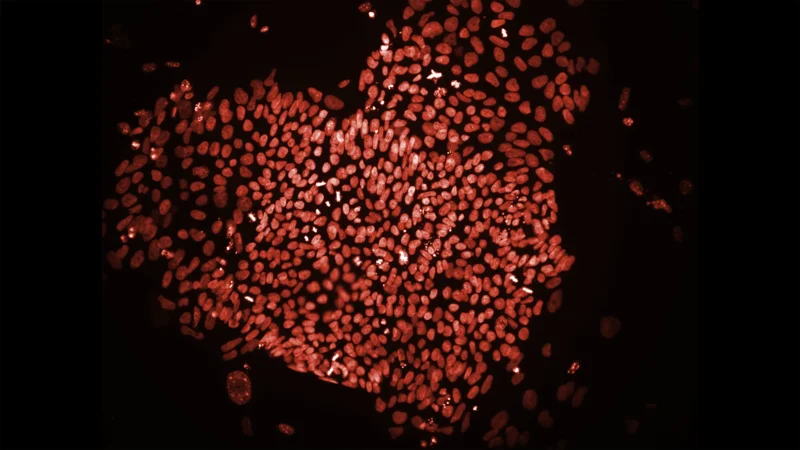
JAX receives an up to $30M contract award to revolutionize drug safety testing with AI-powered “virtual hearts”
New CARDIOVERSE project combines AI, stem cells and genetic variation to predict drug safety before human trials.
View more